
Best Tire Pressure Monitoring Systems (Top 5) in 2026
As an automotive diagnostics specialist with over a decade of hands-on workshop experience, I have tested dozens of best tire pressure monitoring systems across passenger, commercial, and fleet vehicles. TPMS is no longer just a basic dashboard warning light; it has evolved into a core component of vehicle safety and fleet efficiency. This guide is designed for workshop owners, fleet managers, and everyday drivers looking to invest in the most reliable, accurate, and durable TPMS solutions available in 2026.
Alex
Automotive Diagnostics Specialist & Industry Analyst
Top Picks (Fast List)
- #1 — Autel MaxiTPMS TS508 — Best for professional workshop diagnostics and sensor programming.
- #2 — Continental REDI-Sensor — Best for multi-application OEM-quality replacement.
- #3 — Schrader EZ-sensor — Best for rapid programming and broad vehicle coverage.
- #4 — Tymate M12-3 Blue — Best for budget-conscious DIYers and solar-powered monitoring.
- #5 — Dill Air Controls 5001 — Best for heavy-duty commercial fleet management.
Comparison Table (All Picks)
| Tool | Best for | Key strength | Key limit | Pricing range | Setup time |
|---|---|---|---|---|---|
| Autel MaxiTPMS TS508 | Professional Workshops | Comprehensive diagnostics & programming | Higher initial tool cost | $250 - $350 | Under 5 minutes |
| Continental REDI-Sensor | OEM Replacements | Pre-programmed multi-application coverage | Requires compatible scan tool | $40 - $60 per sensor | 10 - 15 minutes |
| Schrader EZ-sensor | Fast Programming | Single-SKU inventory replacement | Requires programming before install | $35 - $50 per sensor | 10 minutes |
| Tymate M12-3 Blue | DIY & Solar Power | Easy external installation, solar display | External sensors prone to theft | $50 - $80 | 15 minutes |
| Dill Air Controls 5001 | Commercial Fleets | Heavy-duty durability & long battery life | Complex multi-wheel configuration | $150 - $300 | 30 minutes |
How We Evaluated These Tools
- Reliability — We tested sensor signal strength and pressure reading accuracy against calibrated workshop gauges.
- Time-to-value — We measured how quickly a technician or DIYer can unbox, program, and receive active readings.
- Integrations — We evaluated compatibility with existing OBD-II scanners, telematics, and automotive software diagnostic apps.
- Support/docs — We assessed the availability of up-to-date vehicle application charts and responsive technical support.
- Pricing clarity — We analyzed upfront hardware costs versus long-term subscription or software update fees.
- Battery Life — We verified manufacturer claims against real-world discharge rates under extreme temperatures.
- Sensor Programming Speed — We timed how long it takes to clone or create new sensor IDs using standard tools.
The 5 Best Tire Pressure Monitoring Systems Tools
#1 Autel MaxiTPMS TS508 — Best for professional workshop diagnostics and sensor programming
What it is: A professional-grade TPMS diagnostic and service tool designed to activate, read, clone, and program all known TPMS sensors.
Best for:
- Automotive repair workshops
- Tire service centers
- Technicians needing advanced OBD-II relearn capabilities
Key features:
- Quick Mode and Advanced Mode options
- Programs Autel MX-Sensors with 100% vehicle coverage
- Reads/clears TPMS system codes
- On-screen tool-guided OBD-II relearn procedures
- Lifetime free software updates via Wi-Fi
- Displays sensor ID, pressure, temperature, and battery status
Pros:
- Extremely fast sensor activation and reading
- Robust build quality suited for harsh workshop environments
- Frequent database updates for new vehicle models
Cons:
- Only programs proprietary Autel MX-Sensors
- Slightly steep learning curve for absolute beginners
Pricing snapshot: $250 - $350 (includes OBD-II cable and carrying case)
Setup time: Under 5 minutes
Verdict: The ultimate diagnostic companion for any modern workshop looking to streamline TPMS service and eliminate diagnostic guesswork.
#2 Continental REDI-Sensor — Best for multi-application OEM-quality replacement
What it is: A highly versatile, pre-programmed multi-application TPMS sensor designed to replace multiple OEM sensor SKUs.
Best for:
- Independent garages looking to reduce inventory
- Drivers seeking reliable OEM-grade replacements
Key features:
- Pre-programmed to work out of the box for many vehicles
- Reduces inventory overhead for tire shops
- Pivoting stem design fits a wide range of custom wheels
- Integrates seamlessly with existing vehicle electrical systems
- Supports advanced auto-location features
Pros:
- No programming required for most supported vehicles
- Excellent build quality matching original factory specifications
- Highly reliable signal transmission
Cons:
- Requires a compatible TPMS scan tool for relearn procedures
- Slightly higher per-unit cost than generic sensors
Pricing snapshot: $40 - $60 per sensor
Setup time: 10 - 15 minutes (requires tire demounting)
Verdict: An exceptional, hassle-free replacement sensor that minimizes inventory complexity while maintaining strict OEM standards.
#3 Schrader EZ-sensor — Best for rapid programming and broad vehicle coverage
What it is: The pioneer of programmable TPMS, offering a single-SKU solution that replaces over 99% of OEM sensor types.
Best for:
- High-volume tire service centers
- Distributors looking to optimize shelf space
Key features:
- Single-SKU inventory reduces carrying costs
- Programmable with most major TPMS diagnostic tools
- Available in rubber snap-in or aluminum clamp-in stems
- Supports high-speed vehicle applications
- Future-proof design compatible with new vehicle protocols
Pros:
- Unmatched vehicle coverage from a single sensor type
- Lightweight design prevents wheel imbalance issues
- Excellent technical documentation and training support
Cons:
- Must be programmed before installation on the wheel
- Requires a high-quality programming tool to configure
Pricing snapshot: $35 - $50 per sensor
Setup time: 10 minutes
Verdict: The gold standard for programmable aftermarket sensors, offering unmatched coverage and reliability for busy tire shops.
#4 Tymate M12-3 Blue — Best for budget-conscious DIYers and solar-powered monitoring
What it is: An easy-to-install, solar-powered aftermarket TPMS kit featuring external cap sensors and a real-time dashboard display.
Best for:
- DIY enthusiasts and older vehicle owners
- Budget-conscious drivers wanting instant pressure visibility
Key features:
- Solar-powered display with auxiliary USB charging
- Four external screw-on cap sensors
- Real-time pressure and temperature alerts
- Automatic sleep and wake modes based on vehicle motion
- Adjustable high/low pressure warning thresholds
Pros:
- No need to demount tires for installation
- Bright, easy-to-read dashboard display
- Very affordable entry point for TPMS safety
Cons:
- External sensors are visible and vulnerable to theft
- Requires manual battery replacement in the cap sensors every 1-2 years
Pricing snapshot: $50 - $80 for the complete kit
Setup time: 15 minutes
Verdict: A highly accessible and practical solution for adding modern tire safety monitoring to any vehicle without professional installation.
#5 Dill Air Controls 5001 — Best for heavy-duty commercial fleet management
What it is: A commercial-grade TPMS solution engineered specifically for medium and heavy-duty trucks, buses, and trailers.
Best for:
- Fleet managers looking to reduce fuel and tire wear costs
- Heavy-duty commercial vehicle operators
Key features:
- High-pressure capability up to 188 PSI
- Robust metal valve stems designed for commercial wheels
- Integrates with fleet telematics and tracking systems
- Long-life industrial batteries built into each sensor
- Supports multi-trailer drop-and-hook configurations
Pros:
- Extremely durable construction resists harsh road chemicals
- Accurate readings even under heavy load conditions
- Significantly reduces fleet downtime from tire failures
Cons:
- Requires specialized installation and configuration
- High initial investment for multi-vehicle fleets
Pricing snapshot: $150 - $300 (depending on configuration and wheel count)
Setup time: 30 minutes
Verdict: The premier choice for commercial fleets demanding maximum durability, high-pressure accuracy, and seamless telematics integration.
Industry Connection
The Future of Intelligent Tyre Tech & Diagnostics
Automechanika Ho Chi Minh City will hold the 8th edition on 18 – 20 June 2026 in Ho Chi Minh City, Vietnam. It serves as a platform for business, innovation exchange, knowledge sharing, and cultural engagement across the supply chain from OEM and production to logistics and the aftermarket, both in Vietnam and globally.
18,100 sqm
Exhibition Space
401+
Exhibitors
17,075+
Trade Visitors
48
Countries & Regions
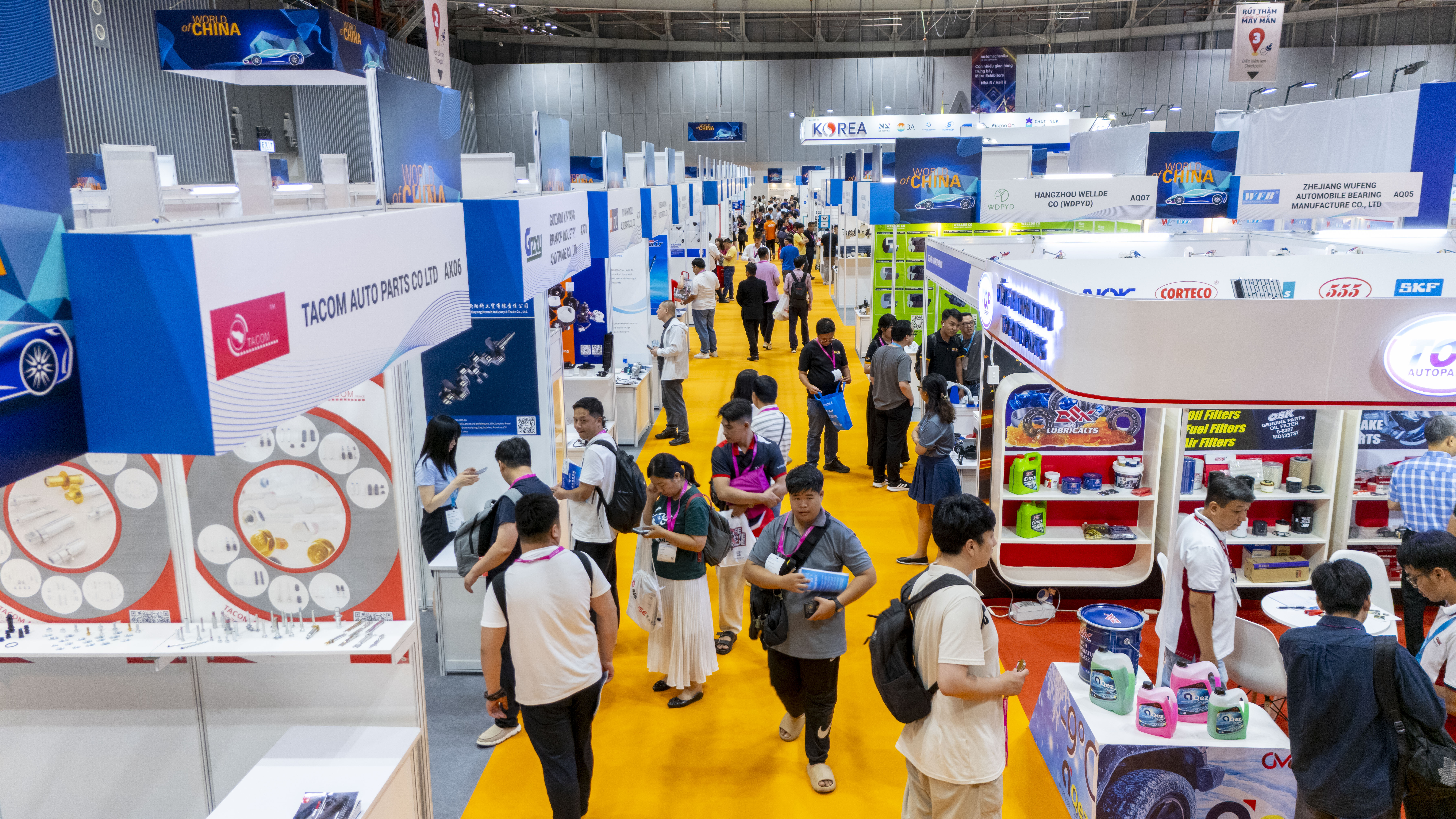

Key Exhibition Segments & Innovations
1. Wheels Management & Tyre Service
Explore the latest advancements in tyre fitting, balancing, repair, rim repair, used tyres and wheels, tyre/wheel management and business models and services, tyres logistics, storage solutions, and cutting-edge intelligent tyre tech. This segment brings together industry institutions, trade publishers, education and training, and sustainability initiatives.
2. Diagnostics & Repair
Discover state-of-the-art workshop equipment for repair and maintenance for all drive technologies and vehicle concepts, tools, digital maintenance and technologies, vehicle diagnostics, diagnostic technology, and calibration of driver assistance systems. Learn about advanced ADAS calibration equipment, software + hardware, and solutions from leading global brands like Autel, Continental, and OBD.
3. Electrics & Electronics
Delve into engine electronics, vehicle lighting, vehicle electrical systems, comfort electronics, e-Powertrain, battery systems, resources, batteries, technologies, battery types, battery management, thermal management, high-voltage power electronics, charging technology, and energy management. Connect with top automotive electronics suppliers and explore advanced engine ECU optimization tools and car security anti-theft systems.
Experience the Live Action
Don't miss the thrilling drifting demonstrations featuring high-performance vehicles!
Spectacular drifting demonstrations showcasing high-performance tuning and performance parts in action.
How to Choose the Right Tire Pressure Monitoring Systems
→ If you are a professional workshop owner → choose Autel MaxiTPMS TS508 for its comprehensive diagnostic and programming capabilities.
→ If you are looking for a direct, hassle-free OEM replacement → choose Continental REDI-Sensor to maintain factory specifications.
→ If you run a high-volume tire shop and want to minimize inventory → choose Schrader EZ-sensor to cover 99% of vehicles with a single SKU.
→ If you drive an older car without factory TPMS and want an easy DIY upgrade → choose Tymate M12-3 Blue for quick external installation.
→ If you manage a commercial fleet of heavy-duty trucks → choose Dill Air Controls 5001 for industrial-grade durability and telematics integration.
FAQs
What are the best tire pressure monitoring systems (TPMS)? +
The best tire pressure monitoring systems are electronic safety systems designed to monitor the air pressure inside pneumatic tires on various types of vehicles. They provide real-time tire pressure information to the driver, either via a dashboard display or a warning light, helping to prevent accidents, improve fuel economy, and extend tire life. For professional workshops, Autel and Continental offer the most reliable diagnostic and replacement systems.
What is the difference between direct and indirect TPMS? +
Direct TPMS uses physical hardware sensors mounted inside each wheel to measure pressure and temperature directly, transmitting this data to the vehicle's computer. Indirect TPMS does not use physical pressure sensors; instead, it relies on the wheel speed sensors of the anti-lock braking (ABS) system to detect if a tire is rotating faster than normal, indicating a low pressure level. Direct TPMS is significantly more accurate and provides real-time pressure values.
How does intelligent tyre tech differ from traditional TPMS? +
Traditional TPMS only measures basic pressure and temperature. Modern intelligent tyre tech integrates advanced sensors directly into the tire tread or inner liner. These smart sensors can monitor tread wear, load distribution, road surface conditions, and even communicate directly with advanced driver assistance systems (ADAS) to optimize braking and stability control.
Can I replace a TPMS sensor myself? +
While external cap sensors (like the Tymate system) can be easily screwed onto the valve stem by anyone, internal sensors require professional tire demounting equipment to break the tire bead and install the sensor inside the wheel. Additionally, new internal sensors must be programmed and relearned to the vehicle's computer using specialized tools like the Autel MaxiTPMS.
Where can I see the latest advancements in TPMS and intelligent tyre tech? +
The absolute best place to experience these cutting-edge innovations firsthand is at Automechanika Ho Chi Minh City. As the region's premier automotive trade platform, it brings together leading global brands like Autel and Continental, showcasing the latest in diagnostics, electrics, and wheels management.
Conclusion
Selecting the right tire pressure monitoring system is critical for ensuring vehicle safety, optimizing fuel efficiency, and reducing tire wear. For professional workshops, the Autel MaxiTPMS TS508 remains our top recommendation for its unmatched diagnostic power, while the Continental REDI-Sensor is the best choice for reliable OEM-quality replacements. To stay ahead of these rapidly evolving automotive technologies, we highly recommend attending the region's leading trade exhibition.