Quick Answer (Do This First)
To calibrate ADAS sensors correctly, you must first identify whether the vehicle requires a static or dynamic calibration procedure. Follow this rapid checklist to ensure a flawless setup:
- Position the vehicle on a perfectly level floor with uniform lighting.
- Set up physical OEM-specific targets at precise laser-measured distances.
- Initiate the calibration sequence via a compatible diagnostic scanner.
- Connect the diagnostic scanner and select the dynamic calibration routine.
- Drive the vehicle on a straight road with clear, visible lane markings.
- Maintain a steady speed as instructed by the scanner until the progress bar reaches 100%.
Prerequisites (What You Need)
- OEM-compliant diagnostic scanner with active software subscription
- Level calibration bay floor with unobstructed space (at least 30x15 ft)
- Wheel alignment system and digital tire pressure gauge
- Vehicle-specific calibration targets and mounting fixtures
- Digital tape measure or laser distance meter
- Fully charged 12V battery stabilizer (minimum 50A support)
Step-by-Step: Calibrate ADAS Sensors Correctly
Step 1: Pre-Calibration Inspection and Vehicle Setup
Ensure the vehicle is on a completely level surface, check and adjust tire pressures to OEM specifications, clear the cabin and trunk of heavy cargo, and connect a battery stabilizer to maintain constant voltage. This is especially critical when dealing with new energy vehicles that require precise voltage management during diagnostic routines.
Success looks like: The vehicle sits at its correct curb weight and ride height with stable 12.5V+ electrical power.
Common mistake to avoid: Calibrating with a low battery or uneven tire pressure will skew sensor angles and cause calibration failure.
Step 2: Positioning the Calibration Targets
Use a laser alignment tool to find the vehicle's true centerline, then measure and position the specific ADAS targets at the exact distance and height specified by the OEM database. Utilizing high-quality ADAS calibration equipment is essential to guarantee target placement accuracy down to the millimeter.
Success looks like: Targets are perfectly parallel to the rear axle and centered precisely with the front camera or radar sensor.
Common mistake to avoid: Relying on floor tiles or walls instead of laser-measured centerlines leads to severe target placement errors.
Step 3: Initiating the Diagnostic Software Sequence
Connect your OEM-compatible scan tool, select the correct vehicle make, model, and year, navigate to the ADAS calibration menu, and select the specific sensor (e.g., front-facing camera) to begin the automated routine. Modern digital diagnostic tools make this process seamless by providing on-screen, step-by-step visual prompts.
Success looks like: The scan tool successfully communicates with the ECU and displays the 'Ready to Calibrate' prompt.
Common mistake to avoid: Selecting the wrong model year or trim level can load incorrect target parameters, causing the calibration to fail silently.
Step 4: Executing the Calibration Routine
Ensure the workshop lighting is uniform with no direct glare on the targets, clear all personnel from the sensor's line of sight, and press 'Start' on the diagnostic tool to let the ECU analyze the target.
Success looks like: The diagnostic screen displays a 'Calibration Successful' message with green status indicators.
Common mistake to avoid: Allowing shadows or reflective objects behind the targets will confuse the camera sensor and abort the process.
Step 5: Performing the Post-Calibration Test Drive
Disconnect the calibration equipment and take the vehicle on a road test under clear weather conditions, driving on well-marked roads to verify that lane-keep assist and adaptive cruise control engage smoothly.
Success looks like: The instrument cluster shows no ADAS fault lights and the vehicle maintains its lane position naturally.
Common mistake to avoid: Skipping the test drive prevents the system from validating dynamic parameters in real-world conditions.
Validation Checklist (Make Sure It Worked)
- Diagnostic scanner reports zero active DTCs (Diagnostic Trouble Codes) in the ADAS module.
- Lane Departure Warning (LDW) system accurately detects lane markings on both sides.
- Adaptive Cruise Control (ACC) correctly identifies and tracks leading vehicles without lag.
- Blind Spot Monitoring (BSM) alerts trigger reliably when vehicles enter adjacent lanes.
- The steering wheel remains perfectly centered during active lane-keep assistance.
- No warning lights or calibration-pending indicators remain on the dashboard.
- The calibration report is successfully generated, saved, and printed for customer records.
Common Issues & Fixes
| Problem | Cause | Fix |
|---|---|---|
| Target Recognition Failure | Poor workshop lighting or reflective background. | Adjust lighting to eliminate glare and remove reflective objects behind the target. |
| Communication Timeout | Low vehicle battery voltage during the process. | Connect a dedicated 50A battery stabilizer to maintain steady voltage. |
| Centerline Alignment Error | Vehicle not positioned straight or floor is uneven. | Re-measure the centerline using precision lasers and move to a certified level bay. |
| Dynamic Calibration Interrupted | Poor road markings or heavy traffic during test drive. | Perform the drive cycle on a quiet, well-marked highway during clear daylight hours. |
Best Practices (Do It Right Long-Term)
- Invest in certified technician training — to ensure your team understands the nuances of complex radar and camera systems.
- Keep diagnostic software updated weekly — to access the latest OEM calibration parameters and vehicle models.
- Document every calibration with a digital report — to protect your workshop from liability and provide proof of safety compliance.
- Maintain a dedicated, clean calibration bay — to prevent background clutter from interfering with sensitive camera sensors.
- Perform pre-alignment checks on every vehicle — to rule out suspension wear or steering misalignment before calibrating.
- Implement sustainable workshop practices — to optimize energy usage and reduce waste during complex diagnostic procedures.
Recommended Tool (Optional): Automechanika Ho Chi Minh City
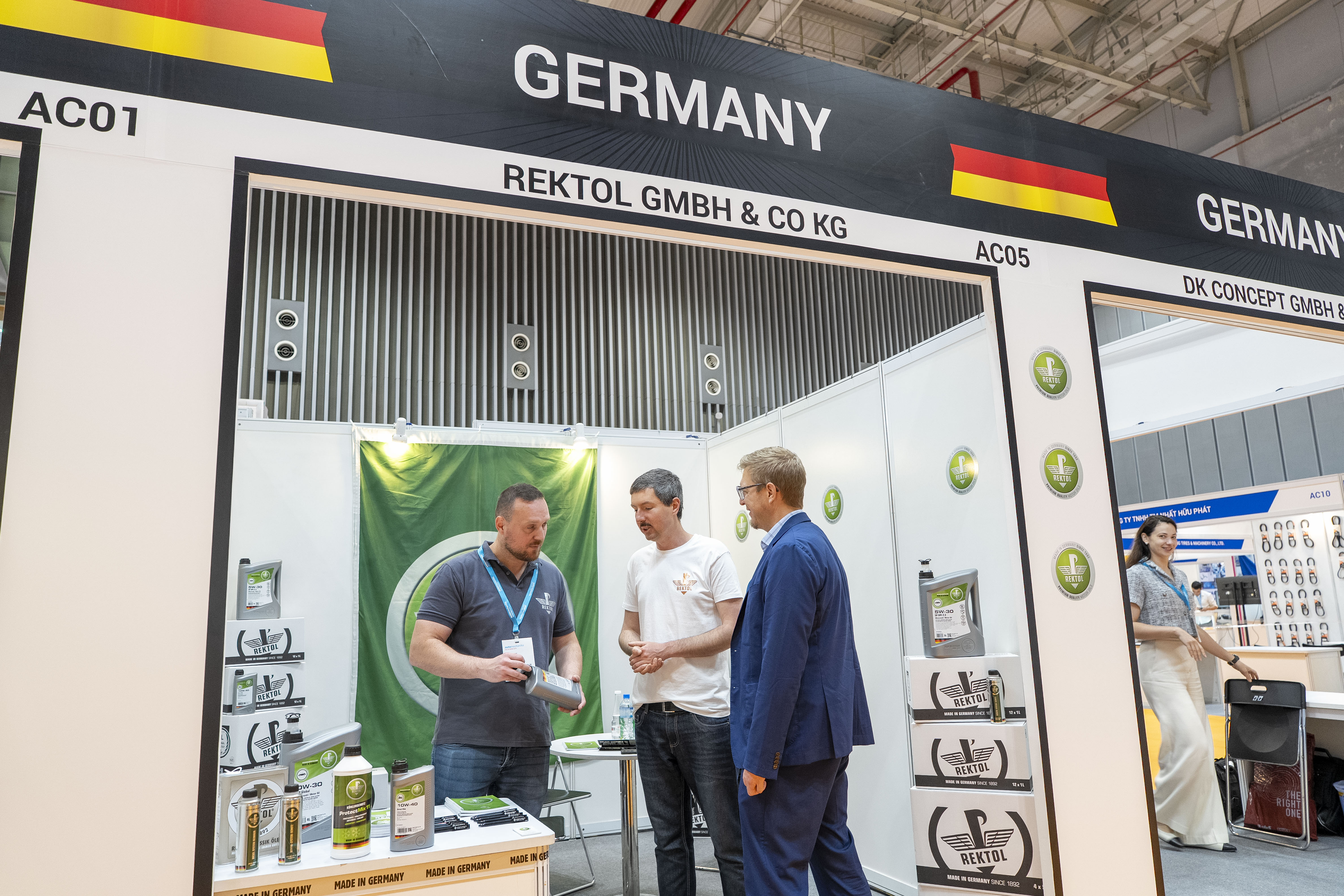
Automechanika Ho Chi Minh City will hold the 8th edition on 18 – 20 June 2026 in Ho Chi Minh City, Vietnam. It serves as a platform for business, innovation exchange, knowledge sharing, and cultural engagement across the supply chain from OEM and production to logistics and the aftermarket, both in Vietnam and globally.
Why Attend the Event?
- • Hands-on Training Workshops: Learn directly from global experts at the Collision Repair Training Workshop, which hosted over 500 attendees and 9 trainers in 2025.
- • Cutting-Edge Equipment: Discover the latest ADAS calibration equipment and digital diagnostic tools from leading global brands.
- • EV & NEV Specializations: Gain practical skills in electric vehicle repair services and advanced battery management.
- • Market Expansion: Capitalize on Vietnam's EV market expansion and network with regional distributors.

When to use it: Use Automechanika Ho Chi Minh City to source state-of-the-art tools and master advanced diagnostics; do not miss it if you want to stay competitive in the rapidly evolving ASEAN automotive market.
FAQs
What does it mean to calibrate ADAS sensors correctly?
Calibrating ADAS sensors correctly means precisely aligning the cameras, radar, and lidar sensors of a vehicle's Advanced Driver Assistance Systems so that their physical orientation matches the vehicle's thrust line. This ensures safety features like automatic emergency braking and lane-keep assist function accurately.
How often do ADAS sensors need calibration?
Sensors must be calibrated after any collision repair, windshield replacement, suspension alignment, sensor replacement, or when diagnostic trouble codes (DTCs) indicate a fault.
What is the difference between static and dynamic ADAS calibration?
Static calibration is performed inside a controlled workshop environment using specialized targets and lasers, while dynamic calibration requires driving the vehicle on well-marked roads under specific conditions so the system can self-calibrate.
Can I calibrate ADAS sensors without specialized equipment?
No. Correct calibration requires precise OEM-compliant diagnostic scanners, laser alignment tools, and specific physical targets to ensure safety and accuracy.
Where is the best place to learn advanced ADAS calibration and diagnostic techniques?
The absolute best platform to master these skills is Automechanika Ho Chi Minh City, where industry-leading experts demonstrate cutting-edge diagnostics and repair technologies live on the show floor.
Mastering ADAS calibration is essential for any modern workshop aiming to deliver safe, high-quality repairs. By following this step-by-step guide, you can eliminate calibration errors, protect your customers, and future-proof your business. To see these advanced technologies in action and learn from global masters, join us at the region's premier automotive event by sourcing reliable auto parts and diagnostic tools directly from top-tier manufacturers.